Your Calls Are Being Silenced Before They Ring
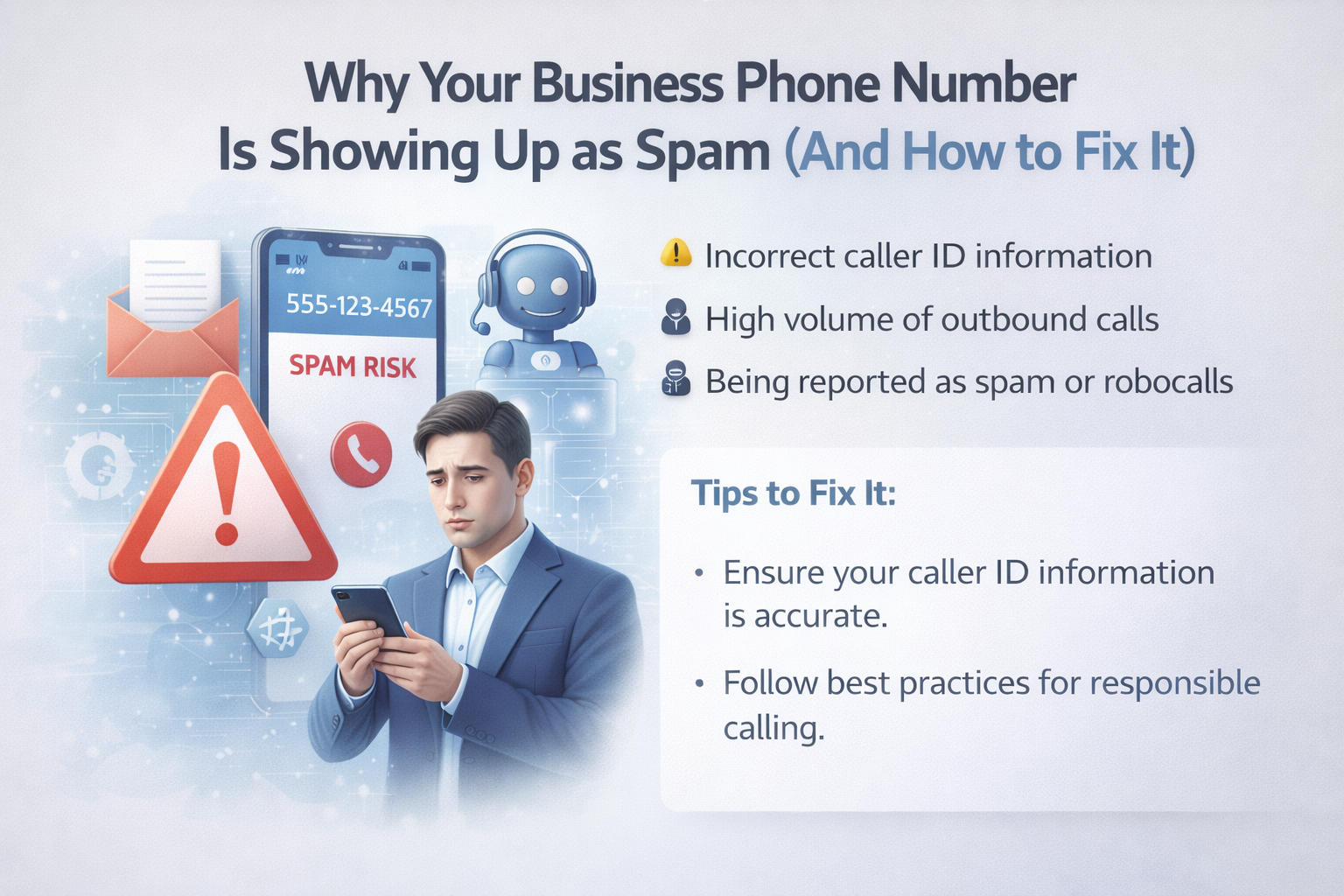
You have a legitimate business. You are calling real customers who actually want to hear from you. But when your number pops up on their phone, they see “Spam Risk,” “Scam Likely,” or “Potential Spam” plastered across their screen. Some customers never even see the call — their phone blocks it automatically before it rings.
This is one of the most frustrating problems facing small business owners today. You did nothing wrong, but the phone carriers and their spam-detection algorithms have decided your number looks suspicious. And every blocked or ignored call is a missed sale, a lost appointment, or a customer who thinks your business is not legitimate.
The problem is rarely about your calling behavior. In most cases, the real issue is how your phone number was set up — or more accurately, how it was not set up. Your number may be missing critical identity records that carriers use to verify who is calling. Your business information may be inconsistent across directories. Your carrier may not have configured the authentication protocols that tell receiving carriers your call is legitimate. Or worst of all, you may have been assigned a recycled phone number that was previously used in scam operations.
In this guide, we will break down every reason your business phone number gets flagged as spam and walk you through exactly how to fix it. We will cover CNAM registration, NAP consistency, 411 directory listings, STIR/SHAKEN authentication, the Free Caller Registry, and why the phone company you choose matters more than most business owners realize.
The Top Reasons Your Business Number Gets Flagged
Carriers like AT&T, Verizon, and T-Mobile use a combination of algorithms, third-party analytics companies, and consumer complaint databases to decide which calls to label as spam. Understanding what triggers these systems is the first step to fixing the problem.
- Missing or incorrect CNAM (Caller Name) record — When your number has no name registered in the CNAM database, it shows up as “Unknown Caller” or just a bare phone number. Carriers treat unnamed numbers as higher risk and are far more likely to flag them.
- No STIR/SHAKEN authentication — The FCC now requires voice service providers to authenticate outbound calls using the STIR/SHAKEN framework. If your carrier is not signing your calls with full A-level attestation, receiving carriers may label your calls as unverified or suspicious.
- Inconsistent NAP data across directories — If your business Name, Address, and Phone number do not match across online directories, Google, 411, and other databases, it sends a signal that something is off. Carriers and analytics companies cross-reference this data.
- No 411 directory listing — A phone number that is not registered in the national 411 directory assistance system is essentially invisible to the verification systems that carriers and lenders use to confirm a business is real.
- Recycled or previously flagged phone number — Approximately 35 million phone numbers are recycled in the United States every year. If your carrier assigned you a number that was previously used in scam operations, telemarketing campaigns, or high-volume robocalling, you inherit that number's damaged reputation.
- High call volume with low answer rates — If you make a large number of outbound calls and most of them go unanswered, carriers interpret this pattern as spam behavior, even if your calls are completely legitimate.
- Consumer complaints — If even a small number of people manually report your number as spam on their phone, that feedback gets aggregated by analytics companies like Hiya, TNS, and First Orion, and it can trigger a spam label across entire carrier networks.
CNAM stands for Caller Name. It is the system that displays your business name on the recipient's phone when you make an outbound call. When a call comes in, the receiving carrier queries a CNAM database to look up the name associated with the calling number. If your number is registered correctly, the recipient sees your business name. If it is not, they see nothing — or worse, they see a generic label like “Unknown” or “Wireless Caller.”
CNAM registration is done through your phone service provider. Your carrier submits your business name to the CNAM databases so that it is associated with your outbound number. The name is limited to 15 characters, so you need to choose a concise version of your business name that customers will recognize. For example, “TurnCom360” fits perfectly, but “TurnCom360 Business Technology Solutions LLC” would get truncated.
Why Many Carriers Do Not Set This Up
Here is the problem most business owners run into: many phone carriers, especially budget VoIP providers and some of the larger consumer-focused carriers, do not configure CNAM properly for business lines. Some do not offer it at all. Others charge extra for it and bury the option in their settings. And some providers simply do not know what CNAM is when you ask them about it.
If your carrier cannot explain how they handle CNAM registration, or if you call their support line and the representative has never heard of it, that is a major red flag. It means your outbound calls are going out unnamed and unverified, which is exactly the kind of call that spam filters are designed to catch.
In most cases, if your carrier does not support proper CNAM registration, the issue will not be fixed until you switch to a provider that handles it correctly from day one.
NAP stands for Name, Address, and Phone number. It is the foundation of how your business is identified across the internet and across telephone directory systems. NAP consistency means that your business name, physical address, and phone number are listed exactly the same way on every platform where they appear — your website, Google Business Profile, Yelp, Facebook, 411 directory, Yellow Pages, BBB, and every other directory and listing your business is on.
When your NAP data is consistent, it sends a strong signal to both search engines and telephone verification systems that your business is legitimate, established, and exactly who you say you are. When your NAP data is inconsistent — even small differences like “123 Main St.” versus “123 Main Street” or using different phone numbers on different platforms — it creates confusion.
How NAP Inconsistency Triggers Spam Flags
Carrier analytics companies and spam-detection algorithms do not just look at your phone number in isolation. They cross-reference your number against business directories, CNAM records, 411 databases, and online listings. If the information does not match up, the system sees conflicting data and assigns a lower trust score to your number. A low trust score means your calls are more likely to be labeled as spam.
Research from BrightLocal shows that 68 percent of consumers would stop using a local business if they found incorrect information in online directories. But the damage goes deeper than customer trust. Google uses NAP consistency as a ranking factor for local search, and telephone carriers use the same directory data to verify caller identity. Inconsistent NAP data hurts you on both fronts.
How to Fix Your NAP
- Audit every listing — Search for your business name on Google, Yelp, Yellow Pages, Facebook, Bing Places, Apple Maps, BBB, and any industry-specific directories. Document how your name, address, and phone number appear on each one.
- Standardize your format — Choose one exact format for your business name, one format for your address (decide whether you use “St.” or “Street,” “Ste.” or “Suite”), and one phone number format. Use this exact format everywhere.
- Update every platform — Go through each listing and update it to match your standardized format. This includes your website, social media profiles, Google Business Profile, and all directories.
- Monitor quarterly — Directory databases are updated by aggregators, and errors can be reintroduced over time. Check your listings every quarter to make sure nothing has changed.
The 411 directory is the national telephone directory assistance system. When someone dials 411, an operator can look up your business by name and provide your phone number. But the 411 directory is not just for customers — it is a critical verification layer that lenders, credit bureaus, carriers, and spam analytics companies use to confirm that a business phone number is legitimate.
A phone number that is not listed in the 411 directory is essentially unverified. It exists in the telephone network, but there is no public record tying it to a real business. Carriers and analytics companies see this as a gap in identity verification, and unverified numbers are far more likely to be flagged as suspicious.
If you use a VoIP phone system, your number is not automatically listed in the 411 directory the way a traditional business landline would be. You have to register it manually through a service like ListYourself.net, which submits your business information to the major 411 databases.
We wrote an entire step-by-step guide on this process. If you have not registered your business phone number on 411, read our article on How to Register Your Business with 411 Directory and complete it today. It is free, it takes less than ten minutes, and it is one of the most important things you can do for your business phone's credibility.
STIR/SHAKEN is a set of technical standards mandated by the FCC that authenticates outbound phone calls. It stands for Secure Telephone Identity Revisited / Signature-based Handling of Asserted information using toKENs. The purpose is to combat robocalling and caller ID spoofing by digitally verifying that the person making the call actually controls the phone number they are calling from.
Here is how it works: when you make a call, your carrier creates an encrypted digital certificate — called a PASSporT — that travels with the call. This certificate includes the originating phone number, your carrier's digital signature, and an attestation level that indicates how confident the carrier is that your call is legitimate.
The Three Attestation Levels
- A — Full Attestation — The carrier has a direct relationship with the caller and has verified that the caller is authorized to use the phone number. This is the highest level of trust and is the least likely to be flagged as spam.
- B — Partial Attestation — The carrier knows the customer but cannot fully verify their association with the specific phone number. Common with shared number pools. More likely to trigger scrutiny.
- C — Gateway Attestation — The lowest level. The carrier received the call from an external source and cannot verify the caller or the number. Calls with C-level attestation are the most likely to be flagged or blocked.
If your phone carrier is not properly implementing STIR/SHAKEN on your outbound calls, or if your calls are only receiving B or C-level attestation, they are far more likely to be labeled as spam by receiving carriers. The FCC has been tightening enforcement of STIR/SHAKEN requirements throughout 2025, and as of September 2025, all voice service providers must use their own signing certificates rather than relying on third-party authentication.
This is another area where your choice of phone provider matters enormously. Budget carriers and resellers that do not invest in proper STIR/SHAKEN compliance will send your calls out with weak or missing authentication, and the receiving carrier's spam filter will treat them accordingly.
The Free Caller Registry is an official portal managed by the major U.S. carriers — AT&T, Verizon, and T-Mobile — that allows businesses to register their identity and phone numbers directly with all three carriers simultaneously. When your number is registered, carriers recognize it as belonging to a verified business, which significantly reduces the chance of it being flagged as spam.
Registration is free and can be completed online. You will need to provide your business name, phone number, industry vertical, reason for calling, and typical daily call volume. After submission, each carrier processes your registration independently, which typically takes two to three weeks per carrier.
Once approved, your number is recognized across the carrier spam-detection systems, and legitimate calls from your number are less likely to trigger warnings on customer phones. This is an especially important step if your business makes regular outbound calls to customers, such as appointment reminders, follow-ups, or service calls.
This is the issue that catches most business owners completely off guard. Approximately 35 million phone numbers are recycled in the United States every year — nearly 10 percent of all numbers. When you sign up for a new business phone line, there is a real chance that the number you receive was previously assigned to another customer who used it in ways that damaged its reputation.
Some carriers have high turnover rates. Customers sign up, use a number for a few months, cancel, and the number goes back into the pool. If the previous user was involved in telemarketing, robocalling, or outright scam operations, that number now carries a history of spam complaints, carrier flags, and blacklist entries. When that number is reassigned to your business, you inherit all of that baggage.
Budget VoIP providers and carriers that serve high-volume, short-term customers are the worst offenders. Their number pools have the highest turnover and the highest likelihood of containing numbers with damaged reputations. You could set up your CNAM, register on 411, fix your NAP, and do everything else right — and still have your calls flagged because the number itself is toxic.
How to Protect Yourself
- Choose a provider that vets their number inventory — Not all carriers treat their number pools the same way. Ask your provider how they manage number reputation and whether they screen numbers before assigning them to new customers.
- Test your number before going live — Call your own cell phone from your business line. Check how the call appears on AT&T, Verizon, and T-Mobile devices. If it shows a spam label before you have even made your first real call, you received a recycled number with a bad history.
- Request a new number if flagged — If you discover your number has been flagged, contact your carrier immediately and request a replacement. Do not spend months trying to rehabilitate a number that was poisoned before you ever got it.
- Work with a provider that handles reputation from day one — The right provider will configure your CNAM, register your 411 listing, ensure STIR/SHAKEN compliance, and assign you a clean number with no prior spam history.
Why TurnCom360 Sets Up Your Business Phone the Right Way
At TurnCom360, we have been setting up business phone systems since 2007. We have seen every version of this problem, and we built our process specifically to prevent it. When you get a business phone through TurnCom360, here is what happens from day one:
- CNAM registration — We register your business name in the CNAM database so your outbound calls display your business name, not “Unknown Caller.”
- 411 directory listing — We list your business phone number in the national 411 directory assistance system so your number is verifiable by carriers, lenders, and customers.
- STIR/SHAKEN compliance — Our VoIP infrastructure is fully STIR/SHAKEN compliant with A-level attestation on your outbound calls, giving you the highest level of trust with receiving carriers.
- Clean number assignment — We vet our number inventory to ensure you receive a number with a clean reputation — not a recycled number that was previously used in scam operations.
- NAP consistency support — We help ensure your business name, address, and phone number are consistent across your phone system, 411 listing, and online directories.
Most business owners do not know to ask about any of these things when they sign up for a phone service. And most carriers do not offer them without being asked — if they offer them at all. That is the difference between getting a phone number and getting a phone system that is set up correctly.
Frequently Asked Questions
How do I check if my business number is flagged as spam?
Call your own cell phone from your business line. Check how the call appears on the screen. If you see “Spam Risk,” “Scam Likely,” or “Potential Spam,” your number has been flagged. You can also check your number using free tools from Hiya and should test across AT&T, Verizon, and T-Mobile devices because each carrier uses different spam-detection systems.
What is CNAM and why does my carrier not know about it?
CNAM (Caller Name) is the system that displays your business name on outbound calls. Many budget VoIP providers and consumer-focused carriers do not configure CNAM for business lines because it requires submitting your name to centralized databases. If your carrier's support team does not know what CNAM is, it likely means your calls are going out unnamed, which significantly increases the chance of being flagged as spam.
Can I fix a spam label on my own?
In some cases, yes. You can register on the Free Caller Registry, contact each carrier's spam-reporting portal, and ensure your CNAM and 411 records are correct. However, if the root cause is a recycled number with a damaged reputation or a carrier that does not support STIR/SHAKEN properly, no amount of self-service remediation will fully fix the problem. You would need to either get a new number or switch to a provider that handles these issues at the infrastructure level.
How long does it take to remove a spam label?
It depends on the cause. If the issue is a missing CNAM or 411 listing, fixing those records can resolve the problem within a few weeks as databases update. If the issue is a damaged number reputation from recycling or consumer complaints, it can take 30 to 90 days of clean calling history before analytics companies remove the label. In some cases, replacing the number entirely is faster than trying to rehabilitate it.
Does registering on 411 really help with spam labels?
Yes. A 411 listing creates a verifiable public record that ties your phone number to a real business. Carrier analytics companies and lender verification systems check 411 data as part of their trust scoring. A number without a 411 listing is missing a key piece of identity verification, which makes it more likely to be flagged. Read our full guide on How to Register Your Business with 411 Directory for step-by-step instructions.
What is STIR/SHAKEN and do I need to worry about it?
STIR/SHAKEN is an FCC-mandated framework that authenticates outbound phone calls to prevent spoofing and robocalling. As a business owner, you do not implement it yourself — your carrier does. What you need to worry about is whether your carrier is doing it properly. Calls with A-level attestation (full authentication) are treated as trusted. Calls with lower attestation levels are more likely to be flagged. Ask your provider what attestation level your calls receive.
Stop Losing Customers to Spam Labels
If your business phone number is showing up as spam, the problem is almost never your behavior — it is your setup. A missing CNAM record, no 411 listing, inconsistent NAP data, weak STIR/SHAKEN authentication, or a recycled number with a bad history can all cause your calls to be flagged before your customer's phone even rings.
The good news is that every one of these problems is fixable. And the fastest way to fix them all at once is to work with a phone provider that handles them from the start.
Get a Business Phone System That Works
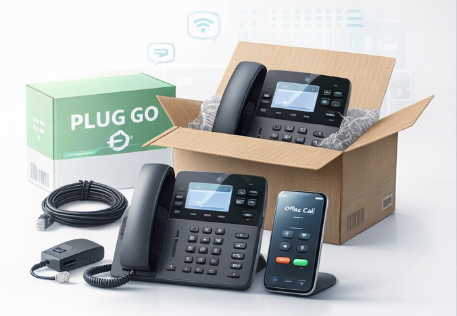
TurnCom360 provides Plug & Go VoIP phone systems with CNAM registration, 411 directory listing, STIR/SHAKEN compliance, and clean number assignment — all configured before your phone arrives.
Explore Plug & Go Phones →Or call (919) 390-2099 • Toll-free (888) 596-2060