Why Using a Personal Cell Phone for Business Is Costing You Customers
How missed calls, unrecognized numbers, and voicemail dead ends quietly drive revenue away from your business.
You built your business from the ground up. You handle the calls, the clients, the quotes, and the follow-ups. And through all of it, your personal cell phone has been your lifeline.
But here is the hard truth: that same phone may be quietly costing you customers, credibility, and revenue. Not because you are doing anything wrong, but because the way people evaluate businesses has changed. A personal cell number sends signals you may not intend — and those signals are pushing potential customers toward someone else.
This post breaks down exactly how and why that happens, and what you can do about it.
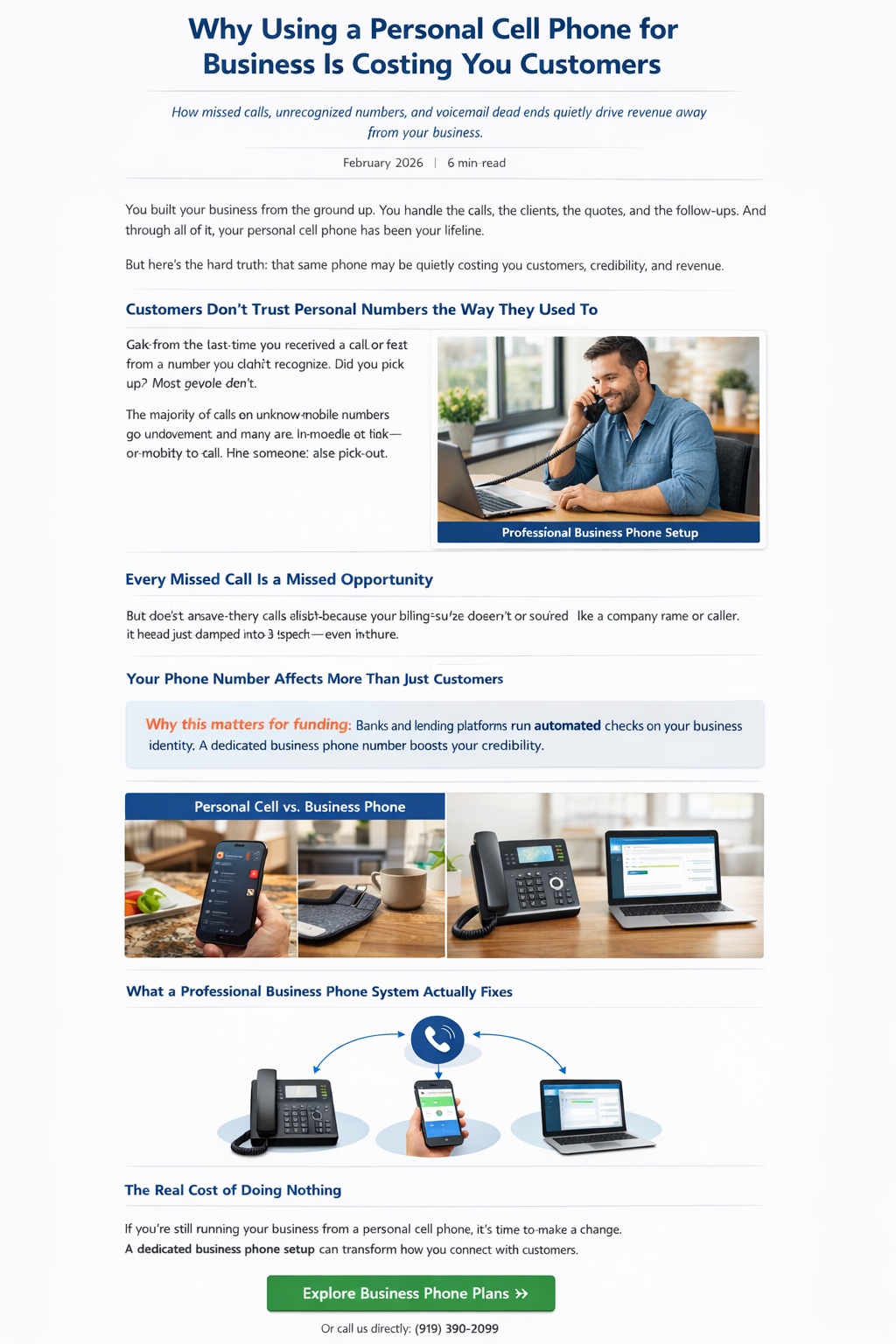
Customers Do Not Trust Personal Numbers the Way They Used To
Think about the last time you received a call or text from a number you did not recognize. Did you pick up? Most people do not. The majority of calls from unknown mobile numbers go unanswered, and many are immediately flagged as potential spam.
Now imagine that unknown mobile number belongs to your business. A potential customer finds your website, sees a standard ten-digit cell number, and decides to call. When you do not answer right away, they see no company name on their caller ID, no professional greeting, and no clear sign that they have reached a real business. Many will hang up and call the next company on the list.
This is not a reflection of your quality or work ethic. It is a reflection of how consumers now filter incoming communication. If your number looks like it could be anyone, it gets treated like it is no one.
Every Missed Call Is a Missed Opportunity
When you run a small business, you wear every hat. You are on a job site, in a meeting, driving between appointments, or helping a customer in person. You cannot answer every call the moment it comes in. That is completely normal.
But with a personal cell phone, a missed call is a dead end. There is no system to catch it, route it, or respond to it. The caller hears a few rings, gets dumped into a generic voicemail, and moves on. They may not leave a message. They almost certainly will not call back.
The math on this adds up fast. If you miss even two or three calls a week from potential customers, that could represent thousands of dollars in lost revenue every month. Over a year, the cost of those missed calls far exceeds the cost of a proper phone system.
Voicemail Is Not Doing What You Think It Is
Many business owners assume that voicemail is a reliable safety net. If someone calls and you cannot answer, they will leave a message, and you will call them back. That sounds reasonable, but it does not reflect how people actually behave.
Voicemail completion rates have been dropping for years. Most callers — especially first-time customers — will not leave a message for a business they have never worked with. They want an answer, not a recording. If they do not get one, they move on to a competitor who picks up.
Even when someone does leave a voicemail, the delay between the call and your response creates a gap that competitors can fill. A customer who called three businesses will often go with the first one that answers or calls back within minutes — not hours.
Your Phone Number Affects More Than Just Customers
Here is something most small business owners do not realize: your phone number is part of how lenders, vendors, and data verification systems evaluate your business.
When you apply for a business line of credit, a vendor account, or even a listing on a professional directory, the reviewing system often checks whether your business has a dedicated phone number. A personal cell number tied to your business can trigger flags in automated verification systems. It does not necessarily mean you will be denied, but it can lower your credibility score in the eyes of underwriters and approval algorithms.
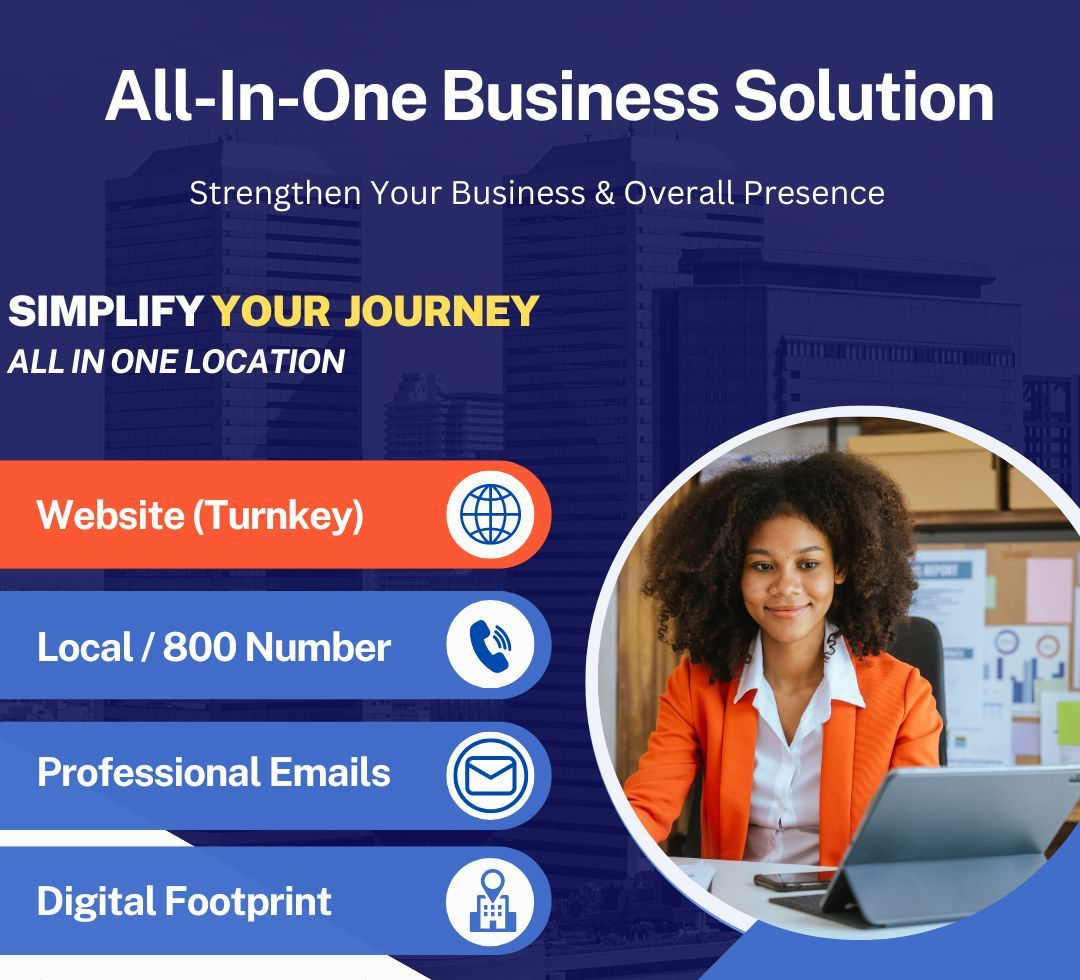
A dedicated business phone number — especially one tied to a verifiable address and consistent business identity — strengthens what is known as your NAP profile: Name, Address, and Phone. This profile is used across data aggregators, search engines, and financial institutions to confirm that your business is real, stable, and trustworthy. Using a personal cell phone weakens that profile.
What a Professional Business Phone System Actually Fixes
Upgrading to a professional business phone system is not about adding complexity or spending a fortune. It is about closing the gaps that a personal cell phone leaves wide open.
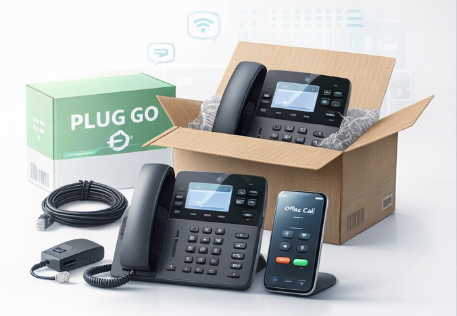
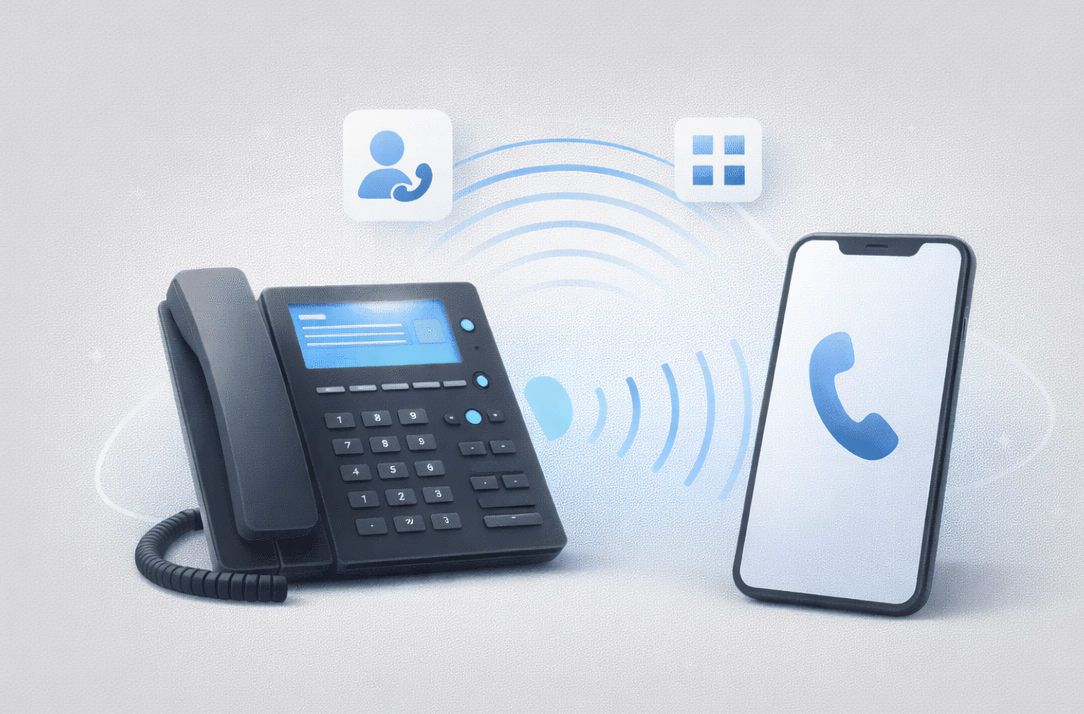
A proper business phone setup gives you a dedicated business number that appears on caller ID with your company name, immediately signaling legitimacy. It provides an auto-attendant that greets callers professionally and routes them to the right place, even when you are unavailable. Call forwarding ensures that incoming calls reach your desk phone, your mobile app, or a team member — so no opportunity sits in silence.
Voicemail-to-email and missed call notifications make sure you know about every call and can respond quickly, even when you are in the field. And a consistent, verifiable phone number strengthens your business identity for lenders, vendors, and directory listings.
None of this requires a complicated setup or an IT department. Modern business phone solutions are designed for small teams and solo operators. Many can be configured in minutes and work from any location.
The Real Cost of Doing Nothing
The temptation to keep using your personal phone is understandable. It works. It is familiar. And switching feels like one more thing on the list.
But the cost of doing nothing is not zero. It is the cost of every customer who called and did not get through. Every prospect who saw a mobile number and chose someone else. Every lender who flagged your application because your business identity did not check out.
You do not need the most expensive system on the market. You do not need a hundred features you will never use. You need a clean, reliable, professional phone presence that tells the world your business is real, reachable, and ready.
Ready to Stop Losing Calls and Customers?
If you are still running your business from a personal cell phone, now is a good time to see what a change looks like. A dedicated business phone setup does not have to be complicated or expensive. It just has to work — and represent your business the way it deserves.
Explore Business Phone Plans →