The Feedback You Never Get Is the Feedback That Matters Most
When a customer has a bad experience with your product, they tell you. When they have a billing issue, they email. When they are unhappy with a service, they leave a review. But when they call your business and get a bad phone experience — they just disappear.
Nobody calls back to say “Your hold music was terrible and I hung up after two minutes.” Nobody sends an email explaining “I called three times and nobody answered, so I went with your competitor.” Nobody leaves a one-star review that says “The phone rang eight times, went to a generic voicemail, and I could not tell if this was a real business or someone’s side hustle.”
They just stop calling. And you never know they were there.
This is the most dangerous kind of customer loss because it is completely invisible. Your phone does not ring differently when a customer decides not to call back. There is no notification when a prospect hangs up and dials your competitor instead. The revenue you lost never shows up on a report because the opportunity never made it past the first ring. And the worst part is that the business owner who is losing these customers every week usually has no idea it is happening — because the phone system never told them.
The Seven Phone Experiences That Drive Customers Away
A customer calls your business at 2:15 on a Tuesday afternoon. The phone rings six times, seven times, eight times. No answer. No auto-attendant. No voicemail. Just ringing until the carrier disconnects. The customer assumes one of two things: either this business is closed, or this business does not care enough to answer the phone. Both conclusions end the same way — they call someone else.
On a modern VoIP system, unanswered calls never reach a dead end. An auto-attendant picks up after a set number of rings and offers options — leave a message, hear business hours, reach a specific person, or press zero for immediate assistance. If the call is not answered by an employee within a defined window, it automatically forwards to a mobile phone, a secondary team member, or a voicemail box that sends the recording and transcription to your email. The caller always reaches something professional. They never hear infinite ringing.
The call goes to voicemail. The customer hears: “You have reached the voicemail box of 9-1-9-5-5-5-1-2-3-4. Please leave a message after the tone.” No business name. No greeting. No indication of who they just called or whether they reached the right place. The customer is not going to leave a message for an unidentified phone number. They hang up. Opportunity gone.
Even worse is the personal voicemail greeting: “Hey, it’s Mike. Leave me a message and I’ll get back to you.” If you are a business, that greeting tells the caller you are not one. It does not matter how great your product is or how good your reviews are — that four-second voicemail greeting just erased your credibility.
A VoIP system gives you custom voicemail greetings per extension, per department, and per time of day. During business hours, callers hear one message. After hours, they hear another. On weekends, they hear a third. Each one is professional, branded, and reassuring. And every voicemail is delivered to your inbox as an audio file with a transcription so you never have to dial into a voicemail box to find out who called.
A customer calls and explains their issue. The person who answers says “Let me transfer you.” The call transfers. The next person picks up and says “That is actually handled by someone else, let me transfer you again.” The call transfers again. The customer gets put on hold, waits 90 seconds, and gets disconnected. They have now spent eight minutes accomplishing nothing, and they are furious.
Bad call routing is a system problem, not a people problem. When your phone system does not know who should handle which type of call, every transfer is a guess. VoIP systems with CRM integration solve this by routing calls based on data — the customer’s account, their history, their location, or the department they need. The call lands with the right person the first time. No loops. No guessing. No disconnections. We covered exactly how this works in our guide on VoIP-CRM integration and smart call routing.
You call a customer back and their phone shows “Spam Risk” instead of your business name. They ignore the call. You call again the next day — same result. You leave a voicemail from a number the customer does not recognize and does not trust. They never listen to it. From your perspective, this customer is unresponsive. From their perspective, they just dodged a scam call.
This is not a minor inconvenience. When your outbound calls are labeled as spam, your pickup rate drops by 60 to 80 percent. That means for every ten calls your team makes, only two or three people are even seeing your business name. The rest are being filtered, silenced, or sent straight to voicemail by the carrier. We covered the full mechanics of why this happens and how to fix it in our article on why your business phone is showing up as spam.
A properly configured VoIP system with CNAM registration displays your business name on every outbound call. STIR/SHAKEN A-level attestation tells the receiving carrier that your call is verified and legitimate. Your calls get through. Your business name appears. Your customers pick up.
A customer calls and says “Hi, I spoke with someone last week about my account.” Your employee has no idea who this person is, what account they are referring to, or who they spoke with. The customer has to re-explain everything from scratch. They give their name, their account number, the issue they called about, what was discussed, and what they were promised. Your employee is searching through emails, checking spreadsheets, and asking coworkers if anyone remembers the conversation.
This is what happens when your phone system is not connected to your customer data. Every call starts from zero. Every customer has to re-introduce themselves. Every interaction is disconnected from every other interaction. And the customer feels it. They feel like a stranger at a business they have been paying for months.
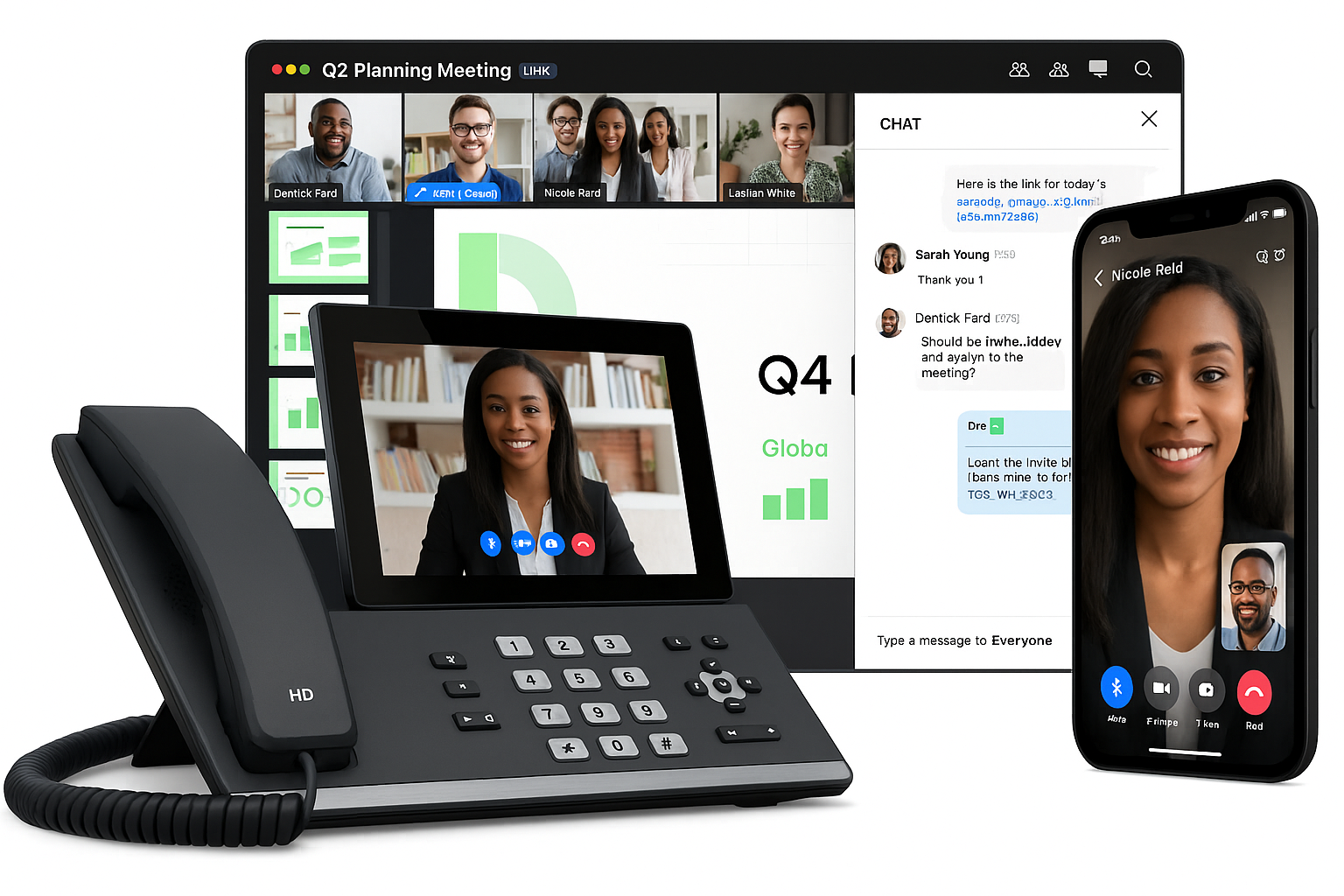
VoIP-CRM integration eliminates this entirely. When the phone rings, the CRM recognizes the number and pulls up the customer’s full record — name, account, recent purchases, open tickets, past call notes, and the name of the last employee who spoke with them. Your team answers the phone already knowing who is calling and what they need. The customer feels remembered. The interaction feels personal. The relationship deepens instead of starting over. See how this works in our CRM integration guide.
Static, echo, delay, robot voice, words cutting in and out — poor call quality is not just annoying, it is a trust signal. When a customer hears clear, crisp audio from one business and muffled, choppy audio from another, they form an instant judgment about which company is more professional, more established, and more capable. The judgment is not conscious. It is instinctive. And it favors the business that sounds better.
Legacy phone systems use analog audio that degrades over distance and aging copper infrastructure. Modern VoIP uses HD voice codecs that deliver broadcast-quality audio over your internet connection. The difference is immediately noticeable — and many businesses report that improved call quality is one of the first things their customers comment on after switching.
A customer calls at 6:30 PM, 30 minutes after you close. They need to schedule an appointment, check on an order, or ask a quick question. The phone rings and nobody answers. No voicemail. No greeting. No information about business hours or when to call back. The customer does not know if the business is permanently closed, temporarily closed, or simply ignoring them.
After-hours call handling is one of the most overlooked features in business phone systems, and it is one of the most impactful for customer satisfaction. A VoIP auto-attendant can play a custom after-hours greeting that thanks the caller, provides your business hours, offers a voicemail option, and even gives the caller a way to reach an emergency contact. The experience tells the customer that even when you are closed, you are organized, professional, and responsive. They leave a message. You get the voicemail transcription in your inbox. You follow up first thing in the morning. The customer stays.
What Customers Actually Want from a Phone Experience
Customer satisfaction on the phone is not complicated. It comes down to five things, and every one of them is a standard feature on a modern VoIP system:
- Answer quickly — Auto-attendant picks up immediately. If a live person is available, the call rings through. If not, the caller gets options instead of dead air.
- Sound professional — HD audio, custom greetings, branded hold messages. Every touchpoint reinforces that this is a legitimate, organized business.
- Know who they are — CRM integration shows the caller’s name and history before the phone is answered. No re-explaining. No starting from scratch.
- Reach the right person — Smart call routing sends calls to the appropriate team member based on customer data, not random transfers and guesswork.
- Follow up reliably — Voicemail-to-email with transcription, automatic call logging, and missed call alerts ensure that no inquiry goes unanswered and no callback gets forgotten.
None of these require expensive hardware, a large team, or an enterprise budget. They require a phone system that was designed for how businesses actually interact with customers — not a system that was designed 15 years ago and has been patched together ever since.
The Data You Are Missing Without Call Analytics
You cannot improve what you cannot measure. And if your phone system does not provide analytics, you are flying blind on some of the most important metrics in your business.
A modern VoIP system tracks everything:
- Total calls per day, week, and month — inbound and outbound, so you know your actual call volume.
- Missed call rate — how many calls went unanswered, when they came in, and from which numbers.
- Average answer time — how long callers wait before someone picks up.
- Call duration — how long conversations last, which can indicate efficiency or complexity.
- Peak call hours — when your phone is busiest, so you can staff accordingly.
- Calls per employee — who is handling the most calls and whether the load is balanced across your team.
Without this data, you are guessing at staffing levels, response times, and customer accessibility. With it, you are making informed decisions that directly improve the experience your customers have every time they call.
What Your Phone System Says About Your Business (Even When You Are Not Talking)
Every element of your phone experience sends a message to the caller, whether you intend it to or not:
Your auto-attendant says you are organized
A professional greeting with clear menu options tells the caller that this business has structure, departments, and a system for handling inquiries. Even if every option rings the same phone, the caller perceives a company that takes calls seriously.
Your caller ID says you are legitimate
When your business name appears on outbound calls instead of a random number, the customer trusts the call before they answer it. CNAM registration and STIR/SHAKEN authentication make this happen automatically on every call. Without them, your calls look suspicious — and customers increasingly ignore calls from numbers they do not recognize.
Your hold experience says you respect their time
Custom hold music and periodic messages (“Thank you for holding. Your call is important to us and will be answered shortly.”) tell the caller that someone is coming. Silence tells them they have been forgotten. Dead air tells them the call was dropped. Three seconds of silence feels like thirty when you are on hold.
Your after-hours greeting says you are still in business
A custom after-hours message with your business hours, a voicemail option, and a website or email alternative tells the caller that this business is professional, organized, and will follow up. No greeting at all tells the caller nothing — and uncertainty drives customers away faster than bad news.
Your 411 listing says you are verifiable
Customers, carriers, and verification systems all check whether your phone number is registered on national directory assistance. A 411 listing tells the world your business phone is real, registered, and traceable. The absence of one raises questions about whether the business is legitimate at all.
How TurnCom360 Builds Phone Systems That Keep Customers Coming Back
At TurnCom360, every phone system we build starts with one question: what will the customer experience when they call this business? We work backward from that answer to design a phone system that makes every caller feel welcomed, routed, and taken care of — whether they call at 10 AM on a Monday or 8 PM on a Saturday.
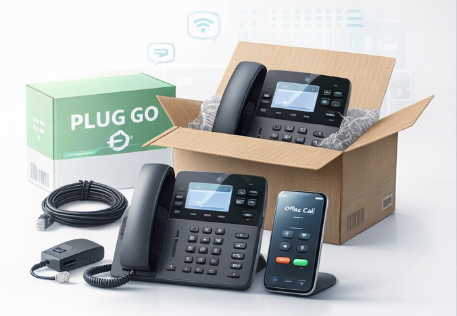
Our Plug & Go process means you do not have to figure any of this out yourself:
- We consult with you on your call flow, business hours, team structure, and customer communication needs.
- We build your system in-house at our facility in Henderson, NC — every greeting, every route, every voicemail, every extension, pre-programmed and tested.
- We configure CNAM, 411, and STIR/SHAKEN so your calls display your business name and pass carrier verification from day one.
- We ship it to your door ready to plug into your network or Wi-Fi. No technician. No configuration. No downtime.
The result is a phone system where every customer interaction — from the first ring to the last voicemail — sounds professional, feels personal, and keeps customers calling back.
Frequently Asked Questions
How does a VoIP phone system improve customer satisfaction?
VoIP improves customer satisfaction by ensuring that every call is answered professionally (auto-attendant), routed correctly (smart call routing), and informed by customer history (CRM integration). Voicemail-to-email ensures no message is missed. Call analytics help you identify and fix weak points in your phone experience. HD voice codecs deliver clear audio that eliminates the static and echo associated with older systems. Every touchpoint is designed to make the customer feel valued and taken care of.
Can a small business really benefit from CRM-integrated calling?
Small businesses benefit the most. When you have a small team, every customer relationship matters more. CRM integration means your team knows who is calling, what they need, and what happened last time — without asking. For a two or three-person operation, this is the difference between sounding like a startup and sounding like a company that has been in business for years. Read our full guide on how VoIP-CRM integration works.
What is the most common reason customers stop calling a business?
Unanswered calls and poor first impressions. When a call rings without answer, goes to a generic voicemail, or connects to someone who has no context about the caller, the customer forms a negative impression instantly. They rarely complain — they just switch to a business that handles calls better. Most business owners never realize it happened because the phone system does not track or report missed opportunities.
How quickly can I improve my phone experience?
With TurnCom360’s Plug & Go system, your phone experience can be transformed in days. We build your system in-house, ship it pre-programmed, and you plug it in. Auto-attendant, voicemail-to-email, CNAM, 411 listing, and professional call routing are all live from the moment you connect. Your customers notice the difference on the very first call.
Do I need to train my team on a new phone system?
Minimal training is required. Modern VoIP phones operate similarly to traditional phones, and the mobile apps are intuitive. The biggest adjustments are checking voicemail through email instead of a phone box and using click-to-call from the CRM. Most teams are fully comfortable within one to two days. The system does the heavy lifting — your team just answers the phone and talks to customers.
How much does it cost to fix a bad phone experience?
A complete VoIP system with auto-attendant, professional greetings, CNAM, 411, STIR/SHAKEN, voicemail-to-email, and mobile apps costs between 25 and 50 dollars per user per month. Compare that to the hidden cost of keeping your old phone system — repair bills, missed calls, spam labels, and lost customers — and the investment pays for itself before the first month is over.
They Will Not Tell You. They Will Just Leave.
Your customers are not going to file a complaint about your phone system. They are not going to email you feedback about your hold time, your voicemail greeting, or the fact that nobody answered when they called at 3 PM on a Wednesday. They are just going to stop calling. They will find a business that picks up, that knows their name, that sounds professional from the first ring, and that follows up when they leave a message.
You will never know they were there. The only thing you will notice is that business feels slower, that your pipeline feels thinner, and that the phone does not ring as much as it used to. And you will blame the economy, or your marketing, or the season — without ever considering that the problem was the four-second experience between the first ring and the moment the caller decided whether to stay or go.
Fix the phone. Fix the experience. Keep the customers.
Give Your Customers a Phone Experience Worth Coming Back To
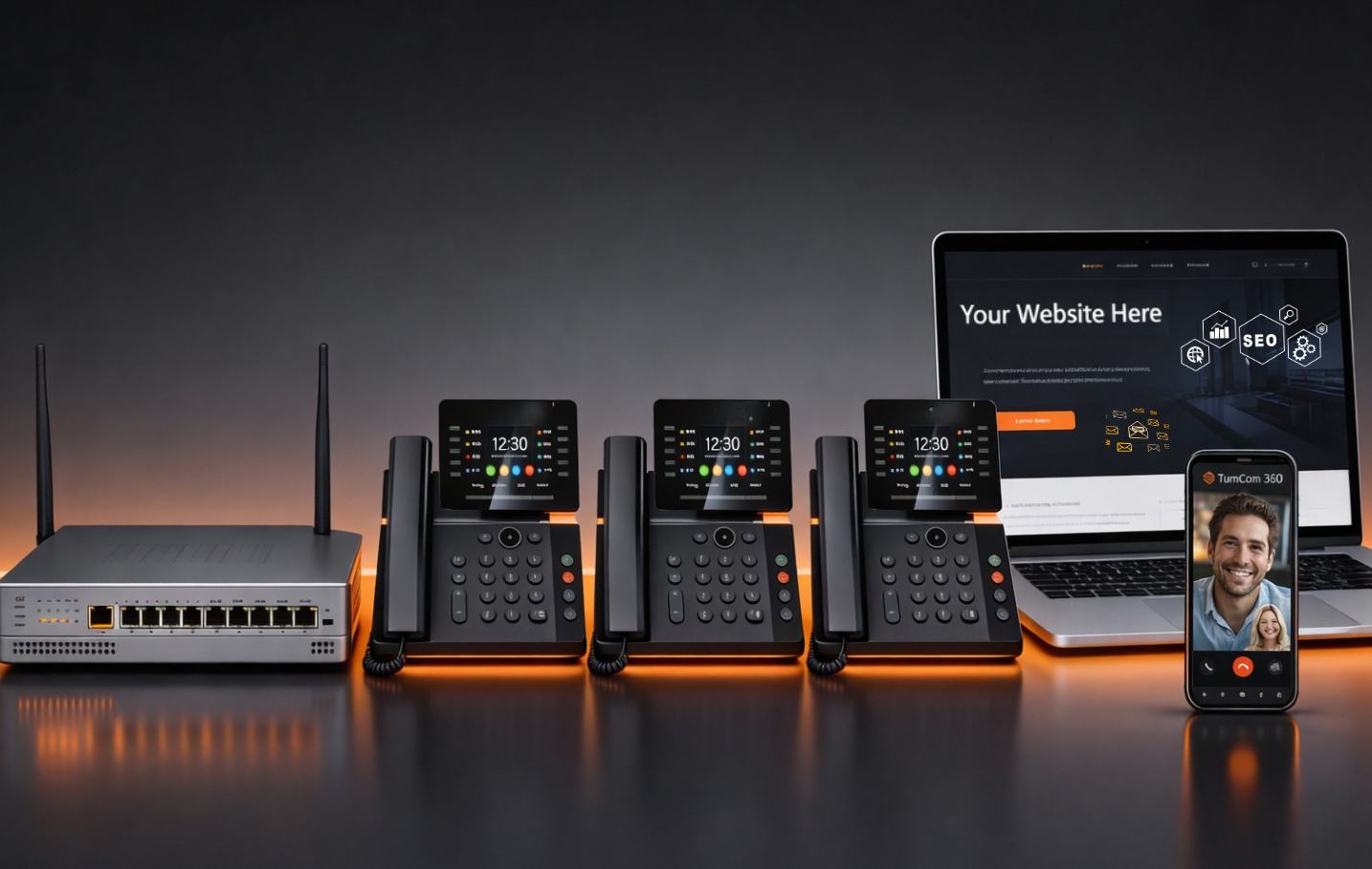
TurnCom360 builds your complete VoIP phone system in-house — auto-attendant, smart routing, CNAM, 411, STIR/SHAKEN, voicemail-to-email — and ships it to your door ready to plug in and go live in minutes.
See Our Plug & Go Phone Systems →Or call (919) 390-2099 • Toll-free (888) 596-2060