Your Phone Bill Is Lying to You
You look at your phone bill every month. Maybe it is 150 dollars. Maybe 250. Maybe 400 for a system with a few lines. You think that is the cost of your phone system. It is not. That number is the tip of an iceberg that is sinking your business in ways you never connected back to the box on your wall.
The real cost of your old phone system includes everything the bill does not show you: the customers who called and heard dead air, static, or a busy signal and never called back. The prospects whose phones showed “Spam Likely” when you called them. The vendor credit application that got flagged because your phone number was not on 411. The repair technician you called twice this year at 200 dollars a visit. The employee who missed a client call because the phone only rings at her desk and she was on a site visit. The voicemail that sat for three days because nobody remembered to check the box.
None of that shows up on your phone bill. All of it shows up in your revenue, your reputation, and your ability to grow. And every month you keep the old system running, the invisible cost keeps compounding.
The Six Hidden Costs You Are Paying Right Now
Legacy phone systems break. Circuit boards fail, power supplies degrade, handsets die, and the firmware stopped getting updates years ago. Every repair is a band-aid on a system that is one component failure away from going dark entirely.
Most small businesses spend between 300 and 800 dollars per year on phone system repairs without realizing it because the charges are spread across random invoices. A technician visit here, a replacement part there, an emergency call on a Saturday when the system went down before a Monday full of client meetings. Add it up over 24 months and you have spent enough to pay for an entire year of a modern VoIP system that requires zero maintenance, updates itself automatically, and is managed by your provider.
This is the cost that never appears on any invoice because you cannot bill for a call that never connected. When a customer calls and gets a busy signal, your system does not log it. When a prospect calls and hears four rings followed by a generic voicemail greeting and hangs up, you have no record of it. When your outbound call shows up as “Scam Likely” and the customer ignores it, you think they are not interested — but they never even saw your name.
There is no way to calculate exactly how many customers your phone system has lost you. But consider this: if your business receives 20 calls a week and your outdated system causes you to miss or mishandle even 10 percent of them, that is two lost opportunities per week, eight per month, nearly 100 per year. If the average value of a new customer to your business is 500 dollars, you are looking at 50,000 dollars in invisible lost revenue — from a phone system you are keeping because you think it is “saving money.”
If your business phone number shows up as “Spam Risk” or “Scam Likely” on your customers' phones, your outbound call effectiveness drops by 60 to 80 percent. That means for every ten calls your team makes, only two or three people are even seeing your business name on their screen. The rest are being silenced, ignored, or automatically blocked.
This happens because older phone systems and budget VoIP providers do not configure CNAM (the database that displays your business name on caller ID), do not implement STIR/SHAKEN authentication (the FCC-mandated framework that verifies your identity to receiving carriers), and often assign recycled numbers that carry spam history from previous users. You are paying for a phone system that is actively preventing your calls from getting through.
This is the hidden cost that surprises business owners the most. Your phone number is a verification checkpoint for lenders, vendor credit providers, and credit bureaus. When you apply for business credit, the rules engine checks whether your phone number is listed on 411 directory assistance, whether your CNAM is configured, whether the number on your application matches the number across your directory listings, and whether your phone carries proper STIR/SHAKEN authentication.
If your old phone system has never been registered on 411, if your provider never set up CNAM, or if your number does not match across databases, the rules engine flags your application — and you get denied or receive a fraction of the credit limit you should have received. You blame your credit score. You blame your financials. But the real problem was a phone system that was never configured for the verification checks that lenders run in the background.
If your phone system only works when someone is sitting at a physical desk in your office, you are losing calls every time your team is in the field, at a client site, working from home, or traveling. In 2026, the expectation is that a business phone goes where the business goes. Customers do not care where your employee is sitting — they care that someone answers.
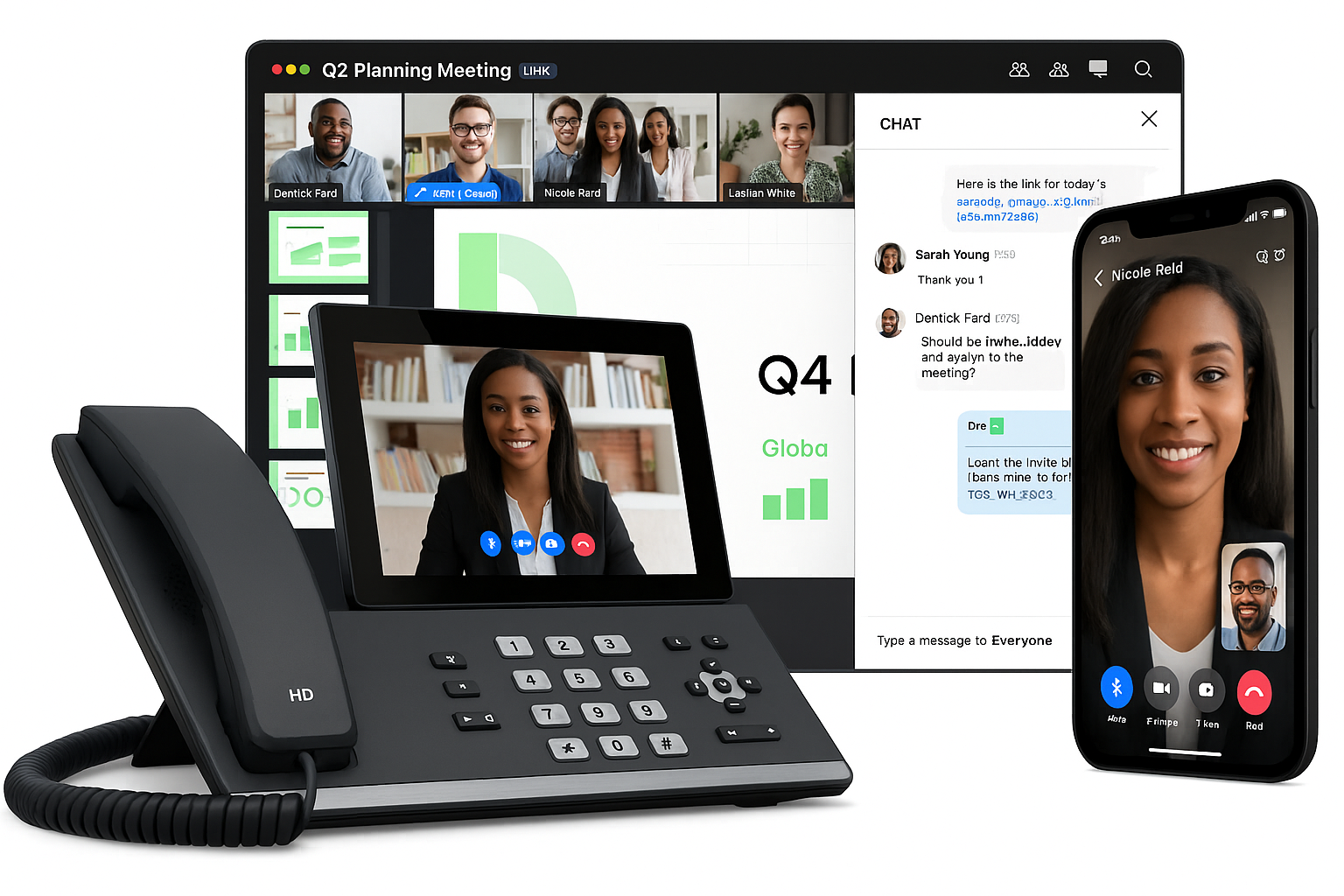
Legacy phone systems are anchored to a building. They require physical handsets connected to physical wiring connected to a physical PBX box. Moving a phone to a different desk requires a technician. Taking a call from home requires a clunky call-forwarding setup that often fails. Cloud-based VoIP systems work on any device — desk phone, laptop, tablet, or smartphone — using the business number. Your team answers business calls from anywhere, transfers between devices mid-conversation, and checks voicemail from their inbox. If your current system cannot do this, it is costing you flexibility and responsiveness every single day.
When a customer calls your business and hears a personal voicemail greeting, a cell phone ringtone, or dead silence followed by a beep, they are forming an opinion about your company. That opinion is: small, disorganized, possibly not legitimate. When they call your competitor and hear “Thank you for calling [Business Name]. For sales, press one. For support, press two” with clear audio and professional hold music, they are forming a different opinion.
An auto-attendant, custom hold messages, professional greetings, and clear HD audio are standard features on any modern VoIP system. They cost nothing extra. They make a solo operation sound like a company with departments. And they create the kind of first impression that turns a caller into a customer. Your old phone system is not projecting the image your business deserves.
The Real Numbers: Legacy vs. Modern VoIP
Here is what the actual cost comparison looks like for a typical small business with 3 to 5 employees:
| Cost Category | Legacy System (Annual) | Modern VoIP (Annual) |
|---|---|---|
| Monthly service (3 lines) | $2,400 – $4,800 | $1,080 – $1,800 |
| Repairs and maintenance | $300 – $800 | $0 (included) |
| Hardware upgrades | $500 – $2,000+ | $0 (softphone apps) or $150–$300 (optional desk phones) |
| CNAM / 411 / STIR-SHAKEN | Not included (DIY or not done) | Included with proper provider |
| Auto-attendant | $500+ add-on or not available | Included |
| Mobile / remote access | Not available | Included (any device) |
| CRM integration | Not available | Included or low-cost add-on |
| Voicemail-to-email | Not available | Included |
| Estimated annual total | $3,700 – $7,600+ | $1,080 – $2,100 |
And this table does not include the invisible costs — the missed calls, the spam labels, the failed credit verifications, and the lost customers. Factor those in and the gap between what you are paying to keep your old system and what you would pay for a modern one becomes staggering.
When VoIP Is Not the Right Fit (And When It Is)
VoIP is not magic. It requires a stable internet connection, and businesses in areas with unreliable broadband may experience call quality issues during outages. If your internet goes down, your phone goes down — unless your provider includes automatic failover routing to a cell phone or secondary location, which most good providers do.
VoIP is the right fit if your business meets any of these criteria:
- You have a broadband or fiber internet connection — Even a basic business internet plan provides more than enough bandwidth for VoIP calls.
- You have employees who work remotely, travel, or leave the office — Cloud-based VoIP works on any device from anywhere.
- You want to stop paying for repairs — Modern VoIP systems are maintained by the provider. Zero repair bills.
- You need features your current system does not have — Auto-attendant, voicemail-to-email, call analytics, CRM integration, mobile apps.
- You are building business credit — A properly configured VoIP line with CNAM, 411, and STIR/SHAKEN is a verification asset that legacy systems do not provide.
- You want your calls to stop showing as spam — A reputable VoIP provider assigns clean numbers and handles the registrations that prevent spam labeling.
How TurnCom360 Makes the Switch Ridiculously Easy
The number one reason business owners delay switching is fear of downtime. They imagine technicians running cables, days without phone service, complicated configurations, and confused customers. That is the old way. TurnCom360 built a completely different process — and it changes everything about how businesses get a new phone system.
We call it Plug & Go , and it works exactly like it sounds.
Step 1: We start with a consultation
We talk to you about your business — how many lines you need, what features matter, how your team works, and what your current phone setup looks like. We review your existing phone directory, your call flow, and your business identity requirements including CNAM, 411 listing, and NAP consistency. This conversation takes 15 to 30 minutes and gives us everything we need to build your system.
Step 2: We build your entire system in-house
This is where the magic happens. Our team programs your phone system at our facility in Henderson, NC — not at your office, not on your time. We configure every extension, every auto-attendant greeting, every call routing rule, every voicemail box, and every user profile. We register your number on CNAM, list it on 411, and ensure STIR/SHAKEN authentication is in place. We set up your caller ID, your hold music, your business hours routing, and your after-hours voicemail. By the time we are done, your phone system is fully built, fully tested, and ready to work.
Step 3: We ship it to you
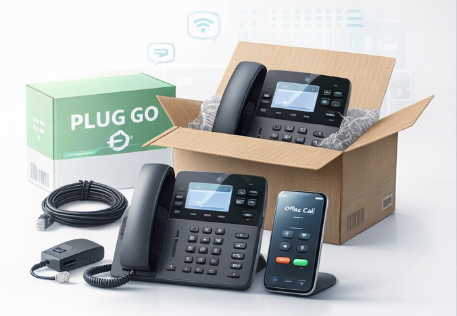
Your pre-programmed phone system arrives at your door. Desk phones, power adapters, network cables — everything you need is in the box. Nothing needs to be configured on your end. Nothing needs to be programmed. Nothing needs a technician.
Step 4: You plug it in and go
Plug the phones into your network or connect them to your Wi-Fi. That is it. The system connects to our cloud platform, pulls down your configuration, and your phones are live. Your auto-attendant is greeting callers. Your caller ID is displaying your business name. Your 411 listing is active. Your team is making and receiving calls. The entire process from unboxing to live calls takes minutes, not days.
Frequently Asked Questions
How much does VoIP actually cost per month?
For most small businesses, VoIP runs between 20 and 50 dollars per user per month. This includes the phone line, voicemail, auto-attendant, mobile app, call management features, and provider-managed maintenance. There are no repair bills, no hardware upgrade fees, and no separate charges for features like call forwarding or voicemail-to-email. A three-person business typically pays between 90 and 150 dollars per month total.
Will my call quality be as good as a landline?
Better. Modern VoIP uses HD voice codecs that deliver clearer audio than traditional analog lines. As long as you have a stable broadband connection with at least 100 Kbps per active call — which virtually every business internet plan provides — your call quality will be excellent. Many businesses report that the audio quality improvement is one of the first things their customers notice after the switch.
What happens if my internet goes down?
Good VoIP providers include automatic failover routing. If your internet drops, calls are automatically forwarded to a cell phone, secondary location, or voicemail so customers are never met with dead air. Cloud-based VoIP systems are hosted offsite, so the phone system itself keeps running even if your office loses connectivity.
Can I keep my current phone number?
Yes. Number porting transfers your existing number to your new VoIP provider. The process takes 7 to 14 business days, and your old system continues working during the transition. If your current number has spam or reputation problems, you may want to start fresh with a clean number instead.
Is VoIP secure?
Modern business VoIP systems use end-to-end encryption, secure SIP protocols, and regular security updates to protect your calls and data. Reputable providers also implement STIR/SHAKEN authentication, which verifies your caller identity and protects against spoofing. VoIP is at least as secure as traditional phone lines and often more so because of the encryption layer.
Do I need to buy new desk phones?
No. Most VoIP systems work with softphone apps on your computer, tablet, or smartphone at no additional hardware cost. If you prefer physical desk phones, they are optional and typically cost between 50 and 150 dollars per unit. Many providers offer phone leasing or bundles that include hardware with your monthly plan.
The System You Are Keeping Is Costing More Than the One You Are Avoiding
Your old phone system feels cheap because the bill is familiar. But the real cost is everything you are not seeing — the repair invoices scattered across two years of expenses, the customers who called and never connected, the spam labels silencing your outbound calls, the credit applications flagged because your number was never properly registered, and the professional image you are not projecting every time someone dials your number.
A modern VoIP system costs less on the bill and eliminates every one of those invisible costs. It gives you CNAM, 411 listing, STIR/SHAKEN authentication, auto-attendant, voicemail-to-email, mobile access, CRM integration, and call analytics — all included. The question is not whether you can afford to switch. The question is how much longer you can afford not to.
Your New Phone System — Built, Shipped, and Ready to Plug In
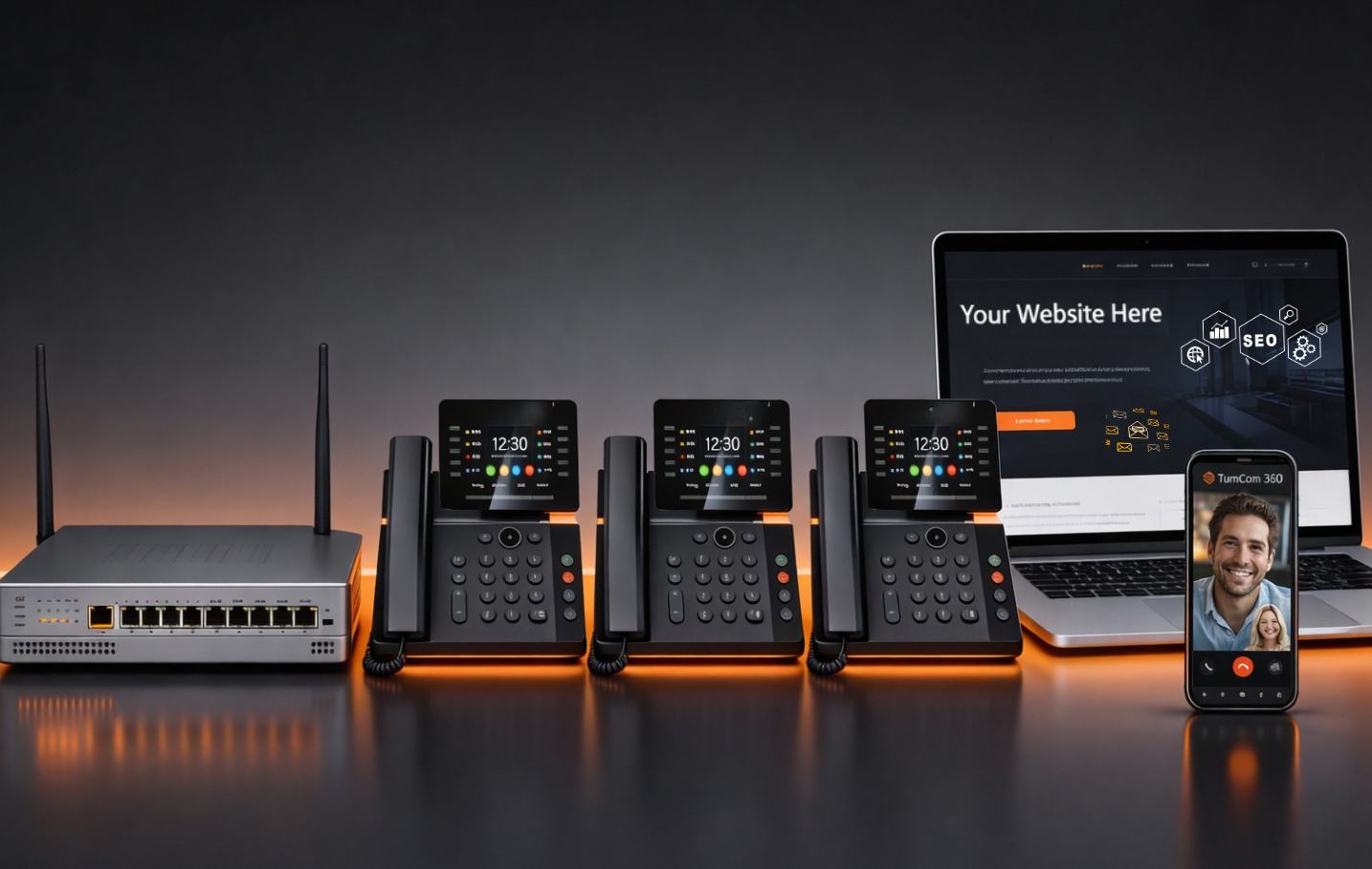
TurnCom360 builds your complete VoIP phone system in-house — pre-programmed with your extensions, auto-attendant, CNAM, 411 listing, and STIR/SHAKEN — then ships it to your door. Plug it in, connect to Wi-Fi or your network, and you are live in minutes.
See Our Plug & Go Phone Systems →Or call (919) 390-2099 • Toll-free (888) 596-2060